Forstner bits drill clean, flat-bottomed holes that no other bit can match — the go-to choice for cabinet hinges, dowels and precise woodworking. Here’s what they do, the sizes to know, and how to get chatter-free results.
What Is a Forstner Bit?
A Forstner bit has a small centre point and a circular rim that shears the wood fibres around the edge of the hole, leaving a smooth wall and a flat bottom. Because the rim guides the cut, Forstner bits can also drill overlapping holes, angled holes and holes right at the edge of a board — things a twist or spade bit struggles with.
What Are Forstner Bits Used For?
- Concealed hinge cups (35 mm is the standard Euro hinge size).
- Flat-bottomed and stopped holes for dowels, plugs and shelf pins.
- Overlapping holes to rough out mortises and slots.
- Clean through-holes where appearance matters.
Common Forstner Bit Sizes
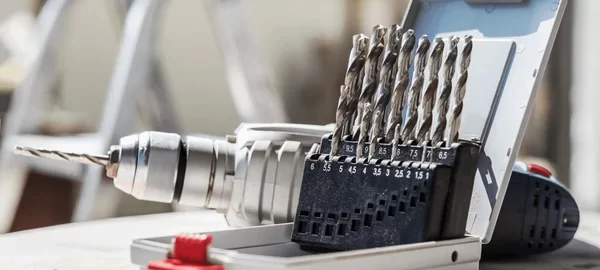
Forstner bits are sold individually and in sets, typically from about 1/4″ up to 2″ or more (and in metric, where 35 mm is the must-have hinge size). A basic set covering 1/4″–1″ handles most furniture and cabinet work.
How to Use a Forstner Bit
- Go slow: Forstner bits cut best at lower speeds — larger sizes especially.
- Use a drill press where you can, for square, controlled holes.
- Clear chips often on deep holes to prevent burning.
- Back with scrap to stop tear-out on through-holes.
Forstner vs. Spade vs. Hole Saw
A spade bit is faster but rougher; a hole saw cuts a ring (leaving a plug) for large through-holes; a Forstner wins whenever you need a clean, flat-bottomed or partial-depth hole. See how they all compare in our wood bit comparison and types of drill bits guides.